Farmers Care

Farmers care for their cows. Verb? Noun? No matter, both most definitely apply to dairy farmers! Farmers feel sentimentally attached to the animals they own, while providing them with the necessities to ensure their health and welfare. Animal health and welfare are extremely important to dairy farmers. We know that in order for a cow to produce milk that is high quality and in good supply, she must be happy and healthy; therefore farmers place a huge emphasis on ensuring that the animals they own are properly cared for.

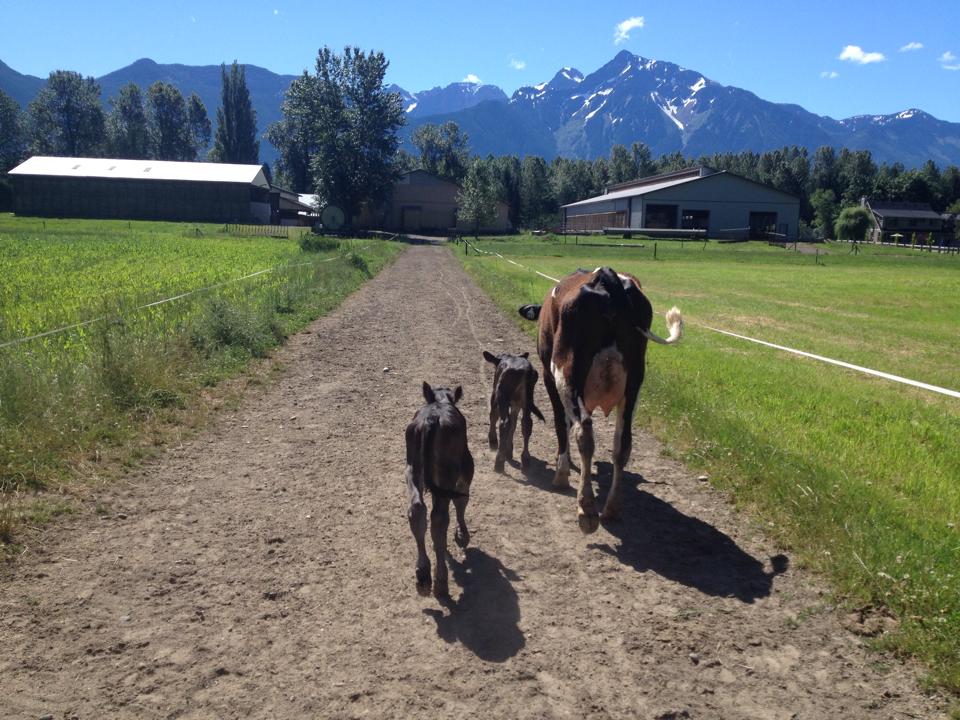
two beauties

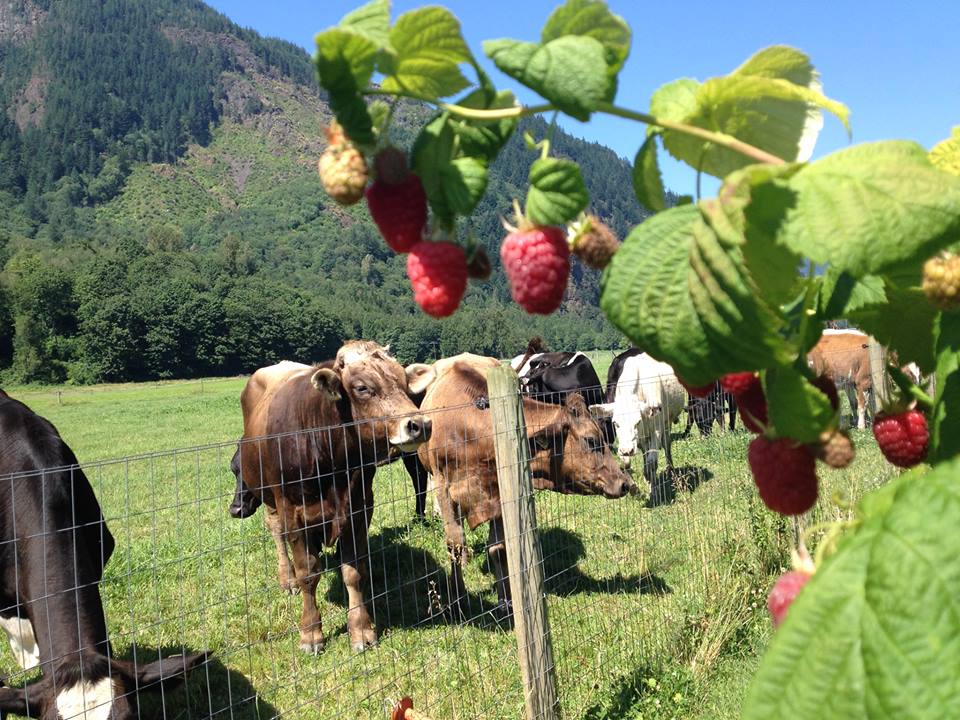
Happy girls on pasture. September 2014

First of all, farmers pay close attention to the feed given to their cows. We take special care to secure high quality feed for our cows. Many farms across Canada grow the majority of their cow feed on farm but purchased feed can also account for part of a dairy farms’ ration. Both purchased and home grown feed must be high quality to guarantee cow health. Farmers work closely with trained and specialized nutritionists to provide the right feed and nutritional components for each stage of a cow’s life. In dairy farming, what goes into the cows has a great impact on their overall health and wellness, which makes quality feed a high priority for dairy farmers.

012

First cut of grass in May 2014

Animal housing also plays an important role in animal care. Across Canada, there are many different styles and types of cow housing, but one thing remains constant: our commitment to provide our cows with a safe and comfortable area to call “home”. Barns provide shelter from the elements: the heat of summer and the extreme cold of winter. Proper ventilation and lighting are paramount in cow comfort; many barns have opaque curtained or paneled sides as well as large overhead doors at the front and back of the barn that allow light and air into barns. In our barns, our cows have plenty of room to move around and socialize with other cows and engage in normal herd behaviours. Our stalls are deep bedded with soft wood shavings; other farms use sand or mats for bedding and some farms even have water beds for their cows! During the growing season, our cows have access to pasture. We find this improves hoof health and strength and cow health. Farms that do not provide access to pasture often install mats on the concrete floors in the barns to provide a cushion that mimics an outdoor surface. Dairy barns are cleaned multiple times per day, removing the manure from the barns via scrapers or through slatted floors, which provides a clean surface for the cows to stand on. Regardless of barn type, farmers know that if a cow is comfortable, she will likely remain healthy and productive.
IMG_1512

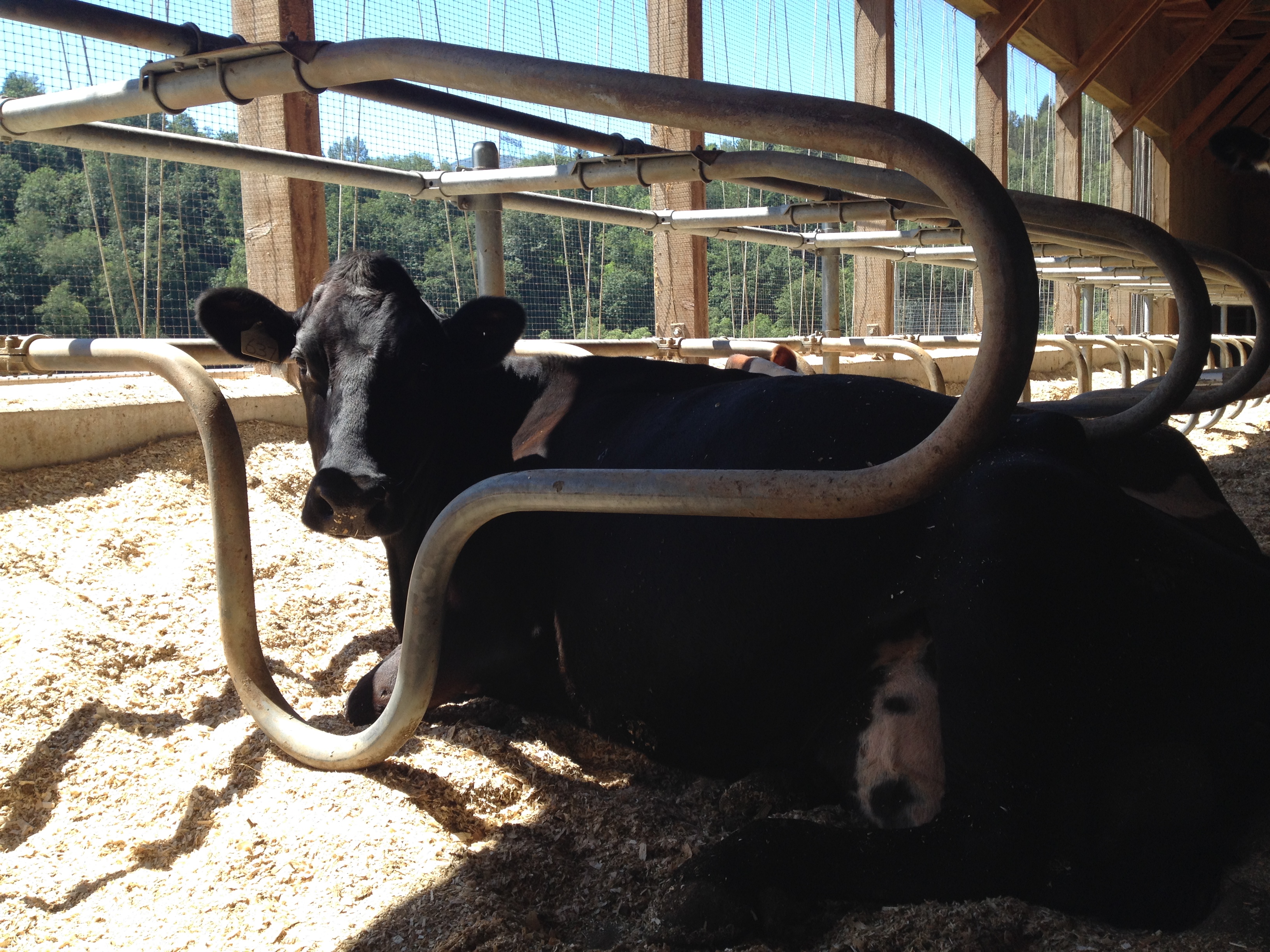
This lovely lady is enjoying the breeze and sunshine flooding in through the opened curtained walls.


Farmers are often actively involved in animal health care:

Hoof care: We provide foot baths for our cows, which helps to stop the growth of painful fungi or infections of the hoof. If a cow has a sore hoof, she is less likely to consume proper amounts of feed and her body condition and health will suffer as a result. Healthy feet are a huge asset in a milk producing cow, so many farmers enlist the help of trained hoof trimming professionals who visit a farm multiple times per year to trim the cows’ hooves and treat any infections or lesions. Yes, our girls are pampered; they have more pedicures done in one year than I have done in 10! In between visits from the hoof trimmer, we will take care to treat any hoof problems that may arise.

Disbudding: Calves are disbudded (their horn buds are removed with a cauterizing iron) at 3 weeks of age, a process that is quick and nearly painless. This process ensures the safety of a cow’s herd mates as well as farm staff. Our calves are sedated and given a local anesthetic and analgesics during the treatment. By the time the sedative has worn off, the calves are unaware that anything out of the ordinary has taken place!

Antibiotic treatments: If a cow is ill or is suffering from an infection, such as mastitis, farmers will treat the cow with antibiotics to combat the infection, at the advice of a veterinarian. If a cow has been treated with antibiotics, her milk must be withheld from the food chain and is discarded until the drug specific withdrawal time (which is the time is takes for the drug to be excreted from the cow’s body) has passed.


Of course, we also enlist the help of a veterinarian team to care for our cows. A vet visits our farm periodically to check our overall herd health and to check each cow’s prenatal status. Additionally, our vet is on call day or night, weekends and holidays, if any problem should arise which we are unable to resolve ourselves. For example, on July 1st, Canada Day (see my Facebook post on July 2 for more details and pictures) we called the vet out to our farm for an emergency. A cow had pushed her uterus out after a hard calving. Without veterinarian care, a prolapsed uterus is a sure death sentence for a cow. Thankfully, with proper treatment, the prognosis in such cases is excellent. The vet arrived promptly and soon had the uterus back in its rightful place. The cow is now doing very well and is showing no ill effects from the traumatic experience. Farmers and vets work together to provide the best possible medical care for dairy cows.

IMG_1529

Cleaning the prolapsed uterus before re-insertion.

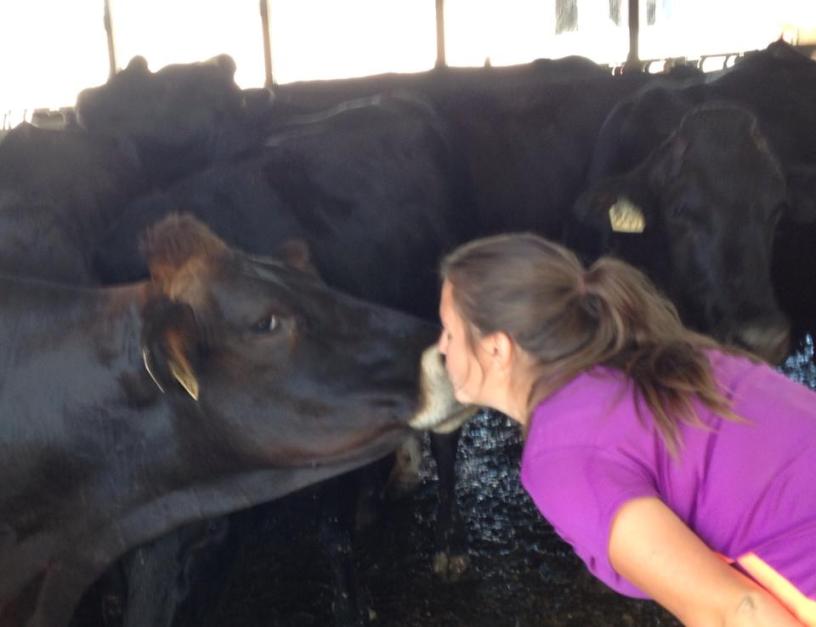
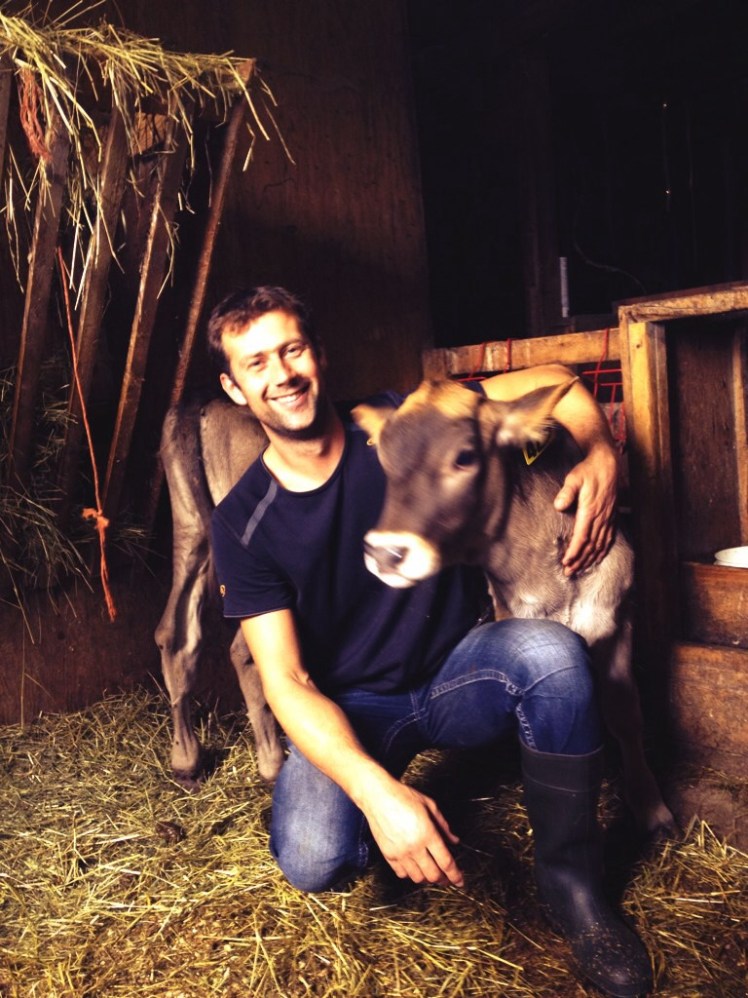
Perhaps the most overlooked but maybe the most important aspect of animal care is the frequent observation of the dairy herd. A good farmer or herd manager will quickly be able to notice any discrepancies or changes in cow behavior and health if they are familiar with the herd and normal cow attitudes and behaviors. Times of close contact with the cows, such as at milking time, are excellent opportunities to observe and record any disparity or change in cow health and wellness. Times like these are also excellent opportunities for showing our affection to our girls – our most affectionate cows often meander over for head rubs and scratches if they see us in the barn. Cows needing extra attention of any sort can then be separated from the herd and have their specific needs compassionately and thoroughly attended to.

IMG_2820

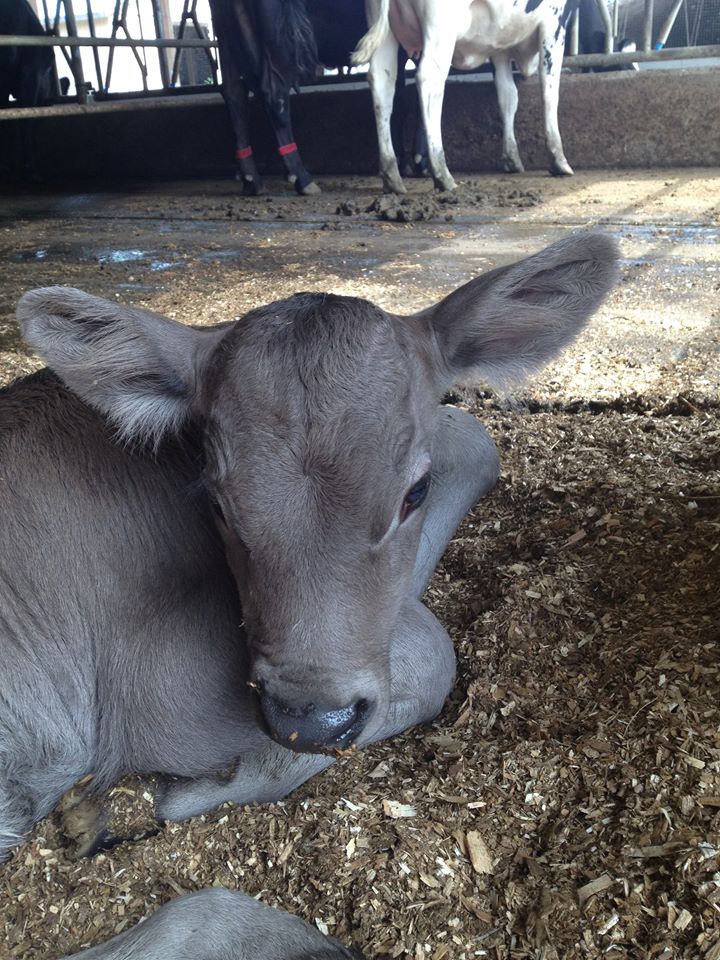
Calf kisses!

The animal welfare section of Dairy Farmers of Canada’s ProAction initiative, the Code for the Care and Handling of Dairy Cattle, which is now mandatory here in British Columbia, as well as in Saskatchewan, Manitoba, New Brunswick, Newfoundland and Prince Edward Island, delves deeply into animal welfare issues. The Code deals with all aspects of animal care highlighted above, as well as cow transportation and euthanasia. If a cow must be transported to auction or slaughter, special protocols are in place to ensure that cows that are unable to withstand the journey or are unable to walk onto the transport truck are not transported at all. If a cow is too weak or ill to be transported, she must remain on farm until she is stronger or must be humanely euthanized if her overall prognosis of recovery is not promising. Farms in these provinces (and soon all across Canada) are required to abide by the Code and are subject to inspections to ensure that each farm places firm emphasis on animal care and welfare.

As dairy farmers, we take great pride in the care given to our cows. We take extreme care to ensure that our girls are comfortable and free of disease and pain and fear. We know that happy, comfortable, well cared for cows produce the best quality milk. And that, after all, is the dairy industry’s mission: providing Canadians with top quality milk that is produced by healthy and happy cows.
Why Organic?

This week, September 20-28, is Canadian Organic Week, a time to celebrate organic food, farming and products across the country. The goal of Organic Week is to involve Canadians in organic agriculture and help them learn about the benefits of organic farming and its positive impact on the environment.

IMG_2355

Since announcing our plans to transition to organic farming, we’ve heard many interesting and humorous assumptions about this type of farming. When talking about our plans, it wasn’t uncommon to hear these types of responses: “Are you going to be growing a beard and sporting dread locks to fit into the hippie farming community?” or, “The only difference between conventional and organic farming is that organic farmers spray RoundUp at night.” or, “Organic? Are you sure? Your fields will soon be overrun with weeds and crop disease!” or, “Organic farmers aren’t allowed to use antibiotics, so instead of treating sick cattle, they leave them to suffer and die.”

Although these responses were sometimes humorous, we noticed that it really emphasized the lack of knowledge about the organic way of farming. We’ve learned a lot in the two years we’ve been farming organically, and we’d like to share some of the knowledge we’ve gained in that period of time with you. I think Organic Week presents an excellent opportunity to describe organic dairy farming and why we decided to make the transition from conventional dairying to organic milk production.

heifer and calves

Approximately two and half years ago, during a conversation with an organic dairy farmer friend, we were told about the demand for organic milk products, the opportunities for growth in the organic sector and the premium paid to organic dairy farmers. This conversation prompted us to seriously think about transitioning to this type of farming. After all, we already employed numerous organic practices: our cows were on pasture during the summer months, our cows were not fed large quantities of grain, and our antibiotic and fertility drug use was quite low. We researched the organic system and found that although the transition would be labour intensive and time consuming, it was a challenge we couldn’t resist accepting. This decision was originally made for mostly economic reasons but has transformed into a firm belief in the organic system’s merits.

IMG_2474

Our dairy herd enjoying a sunny early fall day on pasture.

So what does “organic” actually mean and how does it apply to dairy farming? Officially, the word “organic” refers to the way agricultural products are grown and processed. Consumers can be assured that organic food is produced using environmentally and animal-friendly farming methods. Organic certification tells the consumer that the product they purchase has been inspected and verified to have been produced and processed according to the Canadian Organic Standard. This Standard is every organic farmer’s bible. It details the required production methods for any type of crop or livestock, and includes a list of Permitted Substances which are permitted for use in organic farming (eg manure, compost, vitamins and minerals, etc.). In organic dairying, both the crops grown and the livestock that are raised and milked must be certified to have been grown and managed according to the Standard.

The main differences between organic and conventional dairying can be divided into two categories: crops and cattle.

Crops:

  • No chemical fertilizer use permitted. We use a combination of cow manure and composted chicken manure to fertilize our crops.
  • No synthetic pesticide use permitted. Instead of using herbicides to control weeds, we utilize mechanical cultivation techniques and crop rotation to minimize weed spread and growth. Our corn crop is seeded later than usual (early June) to minimize wire worm problems. Wire worms move deeper into the soil as the soil warms, so seeding in June helps to prevent loss of corn plants to this pest, as well as ensuring that the corn grows quickly and doesn’t become choked out due to weed growth.
  • Crop rotation and cover crop seeding/mulching/integrating into the soil are integral parts of an organic farm plan
This year's organic corn crop

This year’s organic corn crop

Cattle:

  • must be fed 100% certified organic feed (GMO free)
  • must have access to pasture during the growing season
  • must gain 20% of their forage intake (dry matter basis) from grazing during the growing season
  • must have access to a walkout area during the winter months and if pasture is inaccessible due to inclement weather during growing season
  • can only be treated with health care aids listed in the Permitted Substances List
  • If these health care aids fail and other drugs must be used, milk withdrawal is 1 month or twice as long as the labeled withdrawal period, whichever is longer.
  • A cow can only be treated with antibiotics twice in one year before losing organic status
  • Organic farms in BC must also adhere to the Code of Care for the Handling of Dairy Cattle (which is mandatory for all dairy farms in BC starting next month.) The Organic Standard’s guidelines and rules with regards to the care and handling of dairy cattle are at least equal to, and, in some cases, more strict than the Code.

10464249_322498914579802_8783463425299320756_n

Organic Certification Process.A farmer wishing to transition to organic must first become certified by an accredited certifying body. The certifying body collects all of the farm’s information:

  • a detailed list of land history and which inputs have been used in the past;
  • soil and water tests;
  • a farm plan describing all crops and livestock grown on farm, crop rotation plans, and pest management plans;
  • field maps;
  • water tests;
  • soil tests;
  • crop sample tests;
  • livestock density charts;
  • pasture log
  • herd treatment records
  • etc.

The initial application process is complicated and time consuming; subsequent yearly applications are much more streamlined and less labour intensive. Next, the certifying body arranges for the farm to be inspected by an independent verification officer. The verification officer visits the farm, inspects all fields and crops, livestock, and farm buildings and then meticulously combs over and audits the farms production records, input records, sales receipts, invoices, etc. Once the verification officer has finished the inspection, s/he prepares a report for the certifying body, identifying any problems or areas where the farm is non-compliant to the Standard, or any areas where the farm has an Opportunity for Improvement (OFI), and, finally, recommends whether the farm is eligible for certification. This process is repeated at least once a year; each farm is inspected once yearly with the possibility of extra unannounced inspections.

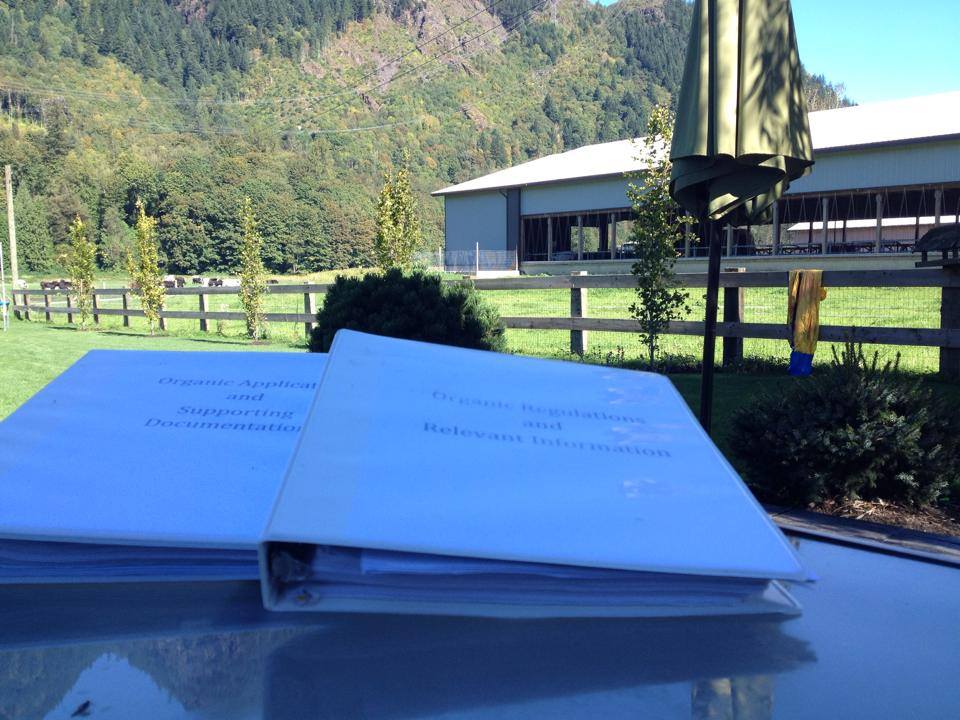
Our organic reference binder and organic records binder. I think they'll both be getting fatter as the years pass!

Our organic reference binder and organic records binder. I think they’ll both be getting fatter as the years pass!

Land to be included in the organic farm plan must be managed according to the standard for three years before being certified organic. Our land is currently in its third year of organic management, which means it has T3 status. The last prohibited substance (chemical fertilizer) was applied to our land in August 2012. Our land will be certified organic next August.

Cows beings transitioned to organic must be managed organically for a minimum of one year before the milk they produce is considered organic. Many farms considering changing to organic milk production choose to sell their herd and start over with certified organic cows, eliminating the need for a transitional period. We chose another route, preferring not to lose our years of crossbreeding to Brown Swiss and the superior (in our opinion!) cows and heifers this crossbreeding produced. Therefore, starting November 1, we will begin transitioning our herd to organic. During the herd transition year, farm raised crops can be fed to the cows. The first nine months of the transition, they must be fed a minimum of 80% organic/farm raised feed, with 20% conventional feed permitted. The final three months, all feed must be organic/farm raised. As soon as the herd is fully certified, all crops fed must be organic (no T3 feed permitted). After this lengthy land and herd transition, we’ll certainly be pleased to see the organic milk truck loading our first tank of organic milk in November 2015!

10442891_309710822525278_8616773171982546825_n

In conclusion:

In our opinion, the organic industry provides valuable choices to consumers. We feel a sense of pride and accomplishment resulting from our efforts to farm sustainably, utilizing environmentally friendly, traditional farming practices, while providing consumers with the opportunity to choose foods that best align with their personal choices and ideals. Although the organic way of farming is a good fit for our family and farm, this is not true for all farms, neither should it be. I admire and respect farmers who choose to farm as we formerly did; they also are good stewards of the land, provide excellent care for their animals, and are great examples of the types of people needed to feed the world. But I believe that the organic industry is vital to agriculture as well, so that all consumers can find foods that they feel best benefits their needs and wants, either conventionally grown or certified organic. And as a farmer, I believe that is our most important, most beneficial job: supplying the world’s population with foods to fit their dietary choices. Up until this point, we are pleased with our decision, and, as we travel further on this organic journey, we’re excited to see what the future has in store for our cows and our family!

Share Your Story

“Milk is full of pus, blood, artificial hormones and antibiotics.”

“Dairy cows are viciously raped while restrained in a rape rack.”

“Dairy cows suffer all sorts of abuse, milked constantly while housed in their own excrement until they are so worn out they are sent to slaughter at four years of age, a fraction of their natural lifespan.”

two beauties

Enjoying beautiful fall weather in the pasture.

If you follow social media at all, chances are you have read these types of statements. Like you, I was shocked and horrified to hear the lies and inaccurate information being broadcast about the dairy industry. I started to speak out about this, trying to provide the truth about our industry and our farms by posting rebuttals to these types of statements and began a farm Facebook page sharing the realities of dairy farming. People began to thank me for providing the truth, admitting they were not that this type of propaganda was not the truth. This made me realize that as dairy farmers, we need to have our voices heard. While a dairy farmer’s first response will most likely be outrage and fury at these lies, we must keep in mind that statements like these stem from a disconnection from and lack of knowledge about animal agriculture. Sadly, the majority of information about animal agriculture found on the internet comes from animal rights groups. Not to be confused with animal welfare groups which aim to improve standards of care for companion and farm animals, animal rights groups have this agenda: the cessation of all animal farming. These groups present this type of information to the masses who have no idea that many of these “facts” are inaccurate, misconstrued, biased or even outright lies. Animal rights groups prey on the knowledge that the average Canadian citizen is so vastly disconnected with agriculture that they have no idea that some or all of the information presented does not at all convey an accurate picture of our family farms.

heifer and calves

This heifer gave birth in the field and needed to be brought into the barn to be milked.

This brings us to the question: What can we as dairy farmers do to provide our consumers with the correct information?

Educate, educate, educate. Our stories and the truths about dairy farming need to be told. There are multitudes of ways in which you can educate and inform the consumer about how you run your farm and treat the animals under your care.  You can open your farm doors to the public to show them how dairy farmers treat their cows with respect, compassion, and care every single day of the year.  Or if social media is your niche, you can post pictures and stories about your farm, cows, crops, and family run farm on Facebook, Twitter or a personal blog. Try approaching a customer purchasing milk or milk products in a grocery store and thank them for supporting our industry, possibly opening up valuable dialogue and providing that consumer with confidence in the product they are purchasing. Regardless of your means of conveying information, each method will begin a conversation about agriculture, bringing new opportunities for farmers to tell their stories.

When advocating for the dairy industry (or “ag”vocating as it is commonly called in the agriculture community), it may be wise to remember these suggestions:

Be aware and prepared: Be aware that some will not listen and will not hear what you have to say. Be especially aware that some of those who choose not to include animal products in their diet will do and say anything to discredit your facts. Unless you are prepared for a long debate about nutrition and ethics, some of those individuals and their responses are perhaps best left alone. Be prepared for hostility, antagonism, and disbelief from those who have been conditioned to unquestioningly believe the animal rights’ dogma. But also be prepared for sincere gratitude when a consumer realizes that the lies they have been told by these extremists are not the truth, and that the bucolic farms of their imagination do in fact still exist.

Be polite and courteous: Our first reactions may be anger and resentment when presented with false and misleading facts about farming, but we need to swallow this anger and respond in a respectful and civil manner. Outrage and annoyance will not win any support, but polite, well thought out responses will engender respect and will give credence to your statements.

Be transparent: Explain or show the consumer our common farming practices. Open your barn doors for tours. Some provinces have lists of farms that are open for tours; consider adding your farm to this list. Answer questions about your farm and farm procedures honestly, and point out the reasoning behind them.  Describe calf care. Explain AI procedures. Show examples of older cows in your herd. Talk about of Canadian Quality Milk program and the Pro Action initiative, and explain how this guarantees milk’s safety and quality. Show the consumer that you are open and above board on all aspects of farm life, and they will no longer feel that we have anything to hide.

cute calf

A new heifer calf!

IMG_1513

Munching on TMR (total mixed ration) in the airy and cool barn.

Be involved: If you are active on social media, consider posting pictures and stories about life on a dairy farm. Share pictures of your cows, calves, barns, parlours or robots, crops, and explain what each picture shows. Remember that what seems self-explanatory to a farmer may be a mystery to a consumer and will likely need some sort of description. Contact your local dairy groups to volunteer your farm for tours or open house days. Visit dairy Facebook or Twitter pages and courteously defend the integrity of the dairy industry by presenting the facts. (100% Canadian Milk on Facebook is a good place to start.) Some of these pages have many anti-milk industry sentiments posted. Polite and intelligent pro-dairy responses from those involved in producing that milk are invaluable.

10446641_323947037768323_4543962116824013664_n

Showing the girls some love on Cow Appreciation Day (July 11)

I firmly believe that the future of dairy farming in Canada and around the world depends on farmers speaking up. We need to show where people are wrong or misinformed about dairy farming. Our industry’s continued growth and success relies on consumers who are confident in the milk products they purchase.  And that’s definitely some serious food for thought.

laura cows

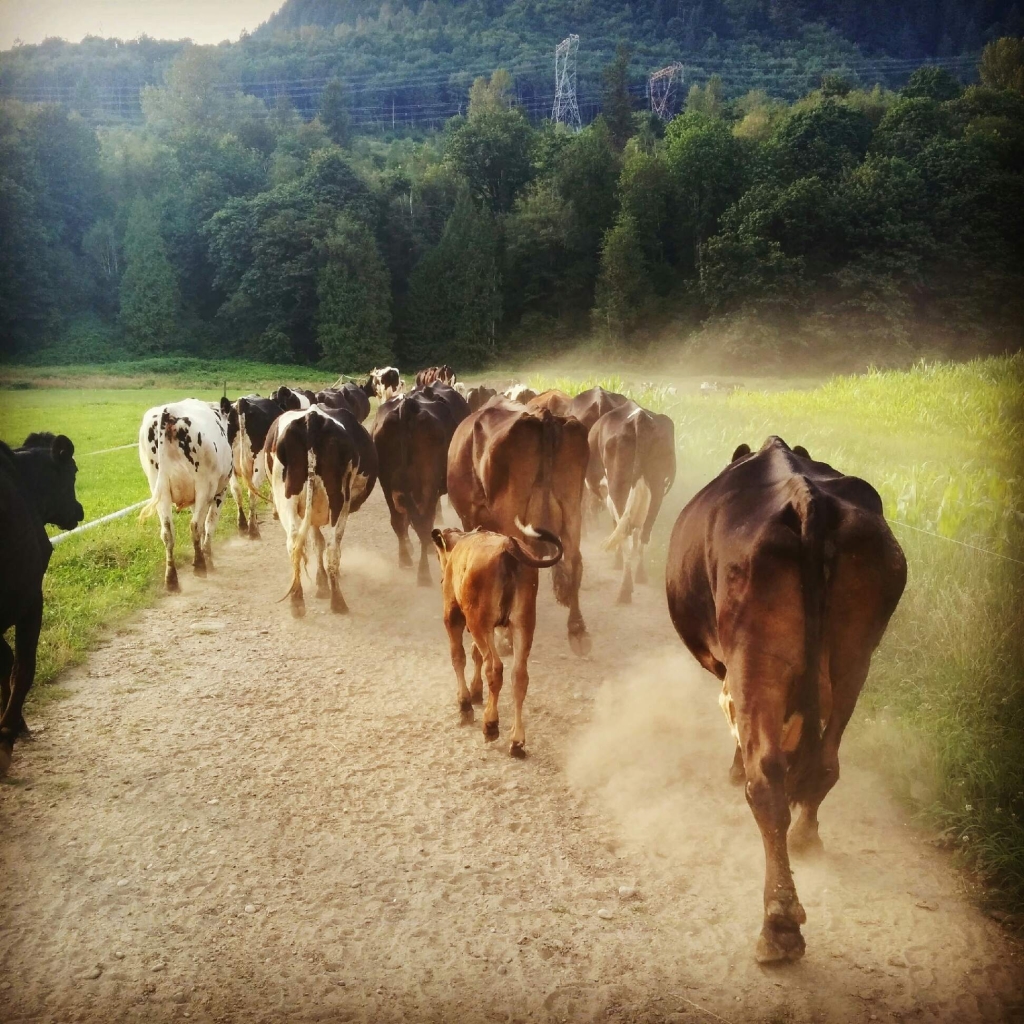
Heading out to pasture after evening milking.